A Pagoda of the Elder Tradition
Architecture & Sacred Relics
A meditation rendered in stone, gold, and symmetry — every tier, every finial, every threshold drawn from the Theravada masters of Southeast Asia.
A meditation rendered in stone, gold, and symmetry — every tier, every finial, every threshold drawn from the Theravada masters of Southeast Asia.
Buddha Dhatu Jadi is not merely beautiful — it is meaningful. Every line in its silhouette carries a teaching; every symmetry, a stillness; every gilded surface, a reminder of the inward light the Buddha pointed toward.
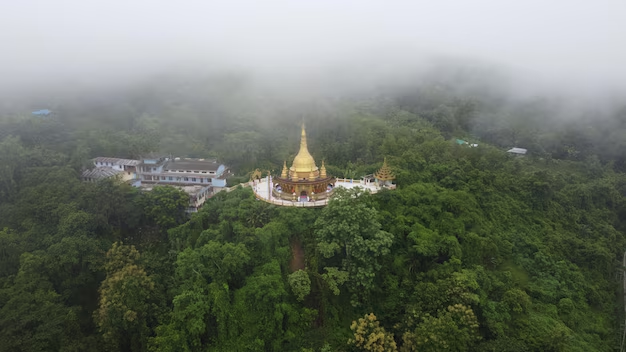
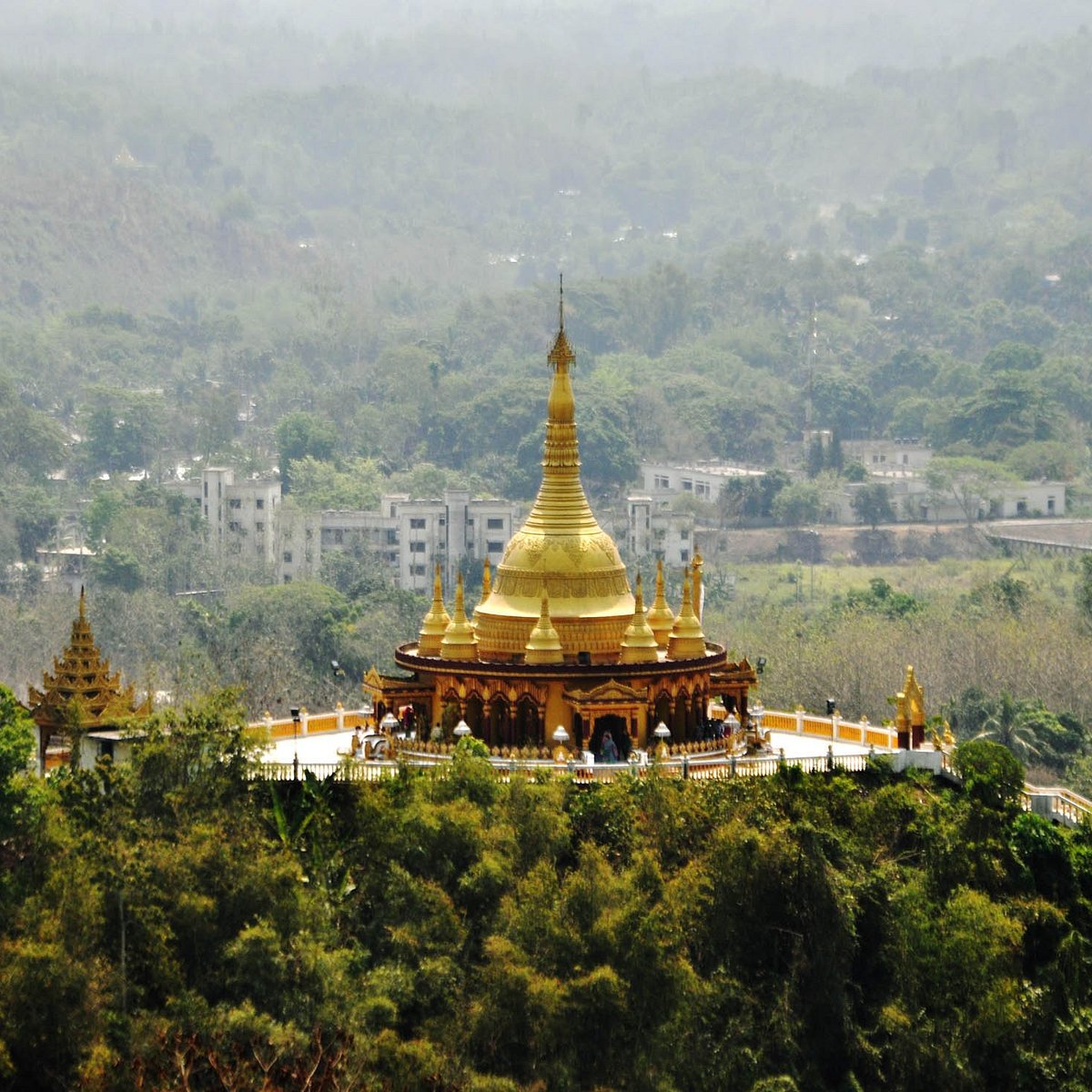
A multi-tiered, gilded pagoda in the Theravada manner — broadening at the base, narrowing as it ascends, leading the eye and the breath upward toward the central spire.
Architectural inflections drawn from Burmese, Thai, and broader Southeast Asian Theravada vocabulary — stepped roofs, bell-shaped finials, and ornamented eaves.
The plan is rigorously symmetrical — four-fold axes opening toward the cardinal directions, expressing the Buddha's gaze in every direction at once.
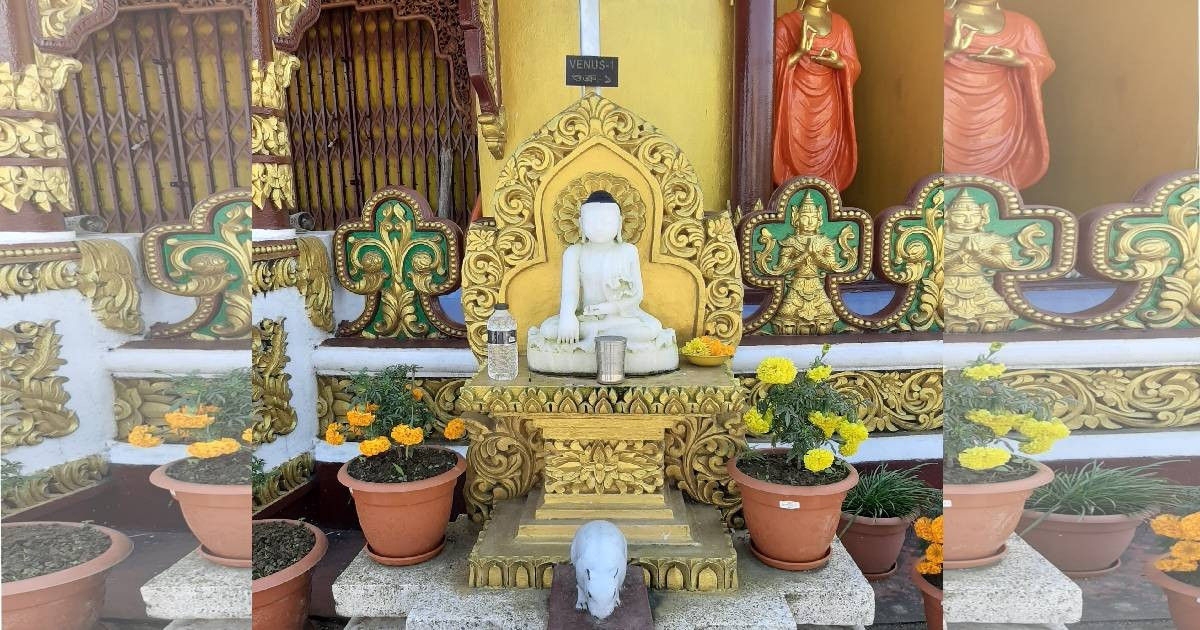
Within the inner sanctum sits the great Buddha — the second-largest Buddha statue in the country, modelled in seated meditation, gilded in a brilliance that catches every shaft of natural light from the high windows.
The hands rest in the dhyana mudrā, palms upturned upon the lap — a gesture of perfect concentration. The eyes are half-closed, neither open to the world nor wholly withdrawn — gazing inward, present.
Around the central figure are subsidiary images, offerings of flowers and lamps, and the soft murmur of ancient Pali chants — the unbroken sound of a living tradition.
.jpg)
The temple's spiritual centre is the relic chamber — the inner stupa within the structure, where the sacred dhatu are enshrined. These holy relics are the reason for the temple's very existence and the reason for its name.
The chamber is treated with the highest reverence: closed to all but the monastic custodians on most days, opened with full ritual on consecrated occasions, and venerated by every visitor who circumambulates the outer stupa.
To circumambulate is itself a teaching: to walk the relic in clockwise mindfulness — silent, slow, present — is to enact the very turning of the Wheel of Dharma.
The temple as architecture, in plain numbers and clear notes — distilled for the heritage traveller.
In all of Bangladesh
In all of Bangladesh
Of Lord Buddha, enshrined
Of architectural symmetry
Above Balaghata, Bandarban
Hand-finished in tradition
The bell-shaped stupa represents the Buddha's parinibbāna — the perfect peace beyond birth and death — and his enduring presence as relic and as teaching.
Each of the rising tiers signifies a level of realisation in the path — the gradual ascent of the practitioner toward awakening, mirroring the climb of the temple itself.
Gold expresses the inward radiance of the awakened mind — luminous, incorruptible, untouched by the dust of conditioned existence.
Throughout the carving and ornament, the lotus appears — the flower whose roots in mud yield a blossom of perfect purity, the classical metaphor of awakening.
The four entrances and outward-facing images express the Buddha's gaze upon every direction — and the universality of the Dhamma.
To raise a temple upon a hill is to lift the Dhamma above the affairs of the world — a visible reminder, seen for many miles, of where to turn the heart.
Practical guidance on how to reach Bandarban, the temple's timings, etiquette, and meditative spaces — prepared with respect and care.
Open Visitor Guide