Origins · Establishment · Legacy
Temple History & Legacy
A heritage shaped by the elder doctrine, the hill peoples of Chittagong, and centuries of unbroken devotion to the Buddha.
A heritage shaped by the elder doctrine, the hill peoples of Chittagong, and centuries of unbroken devotion to the Buddha.
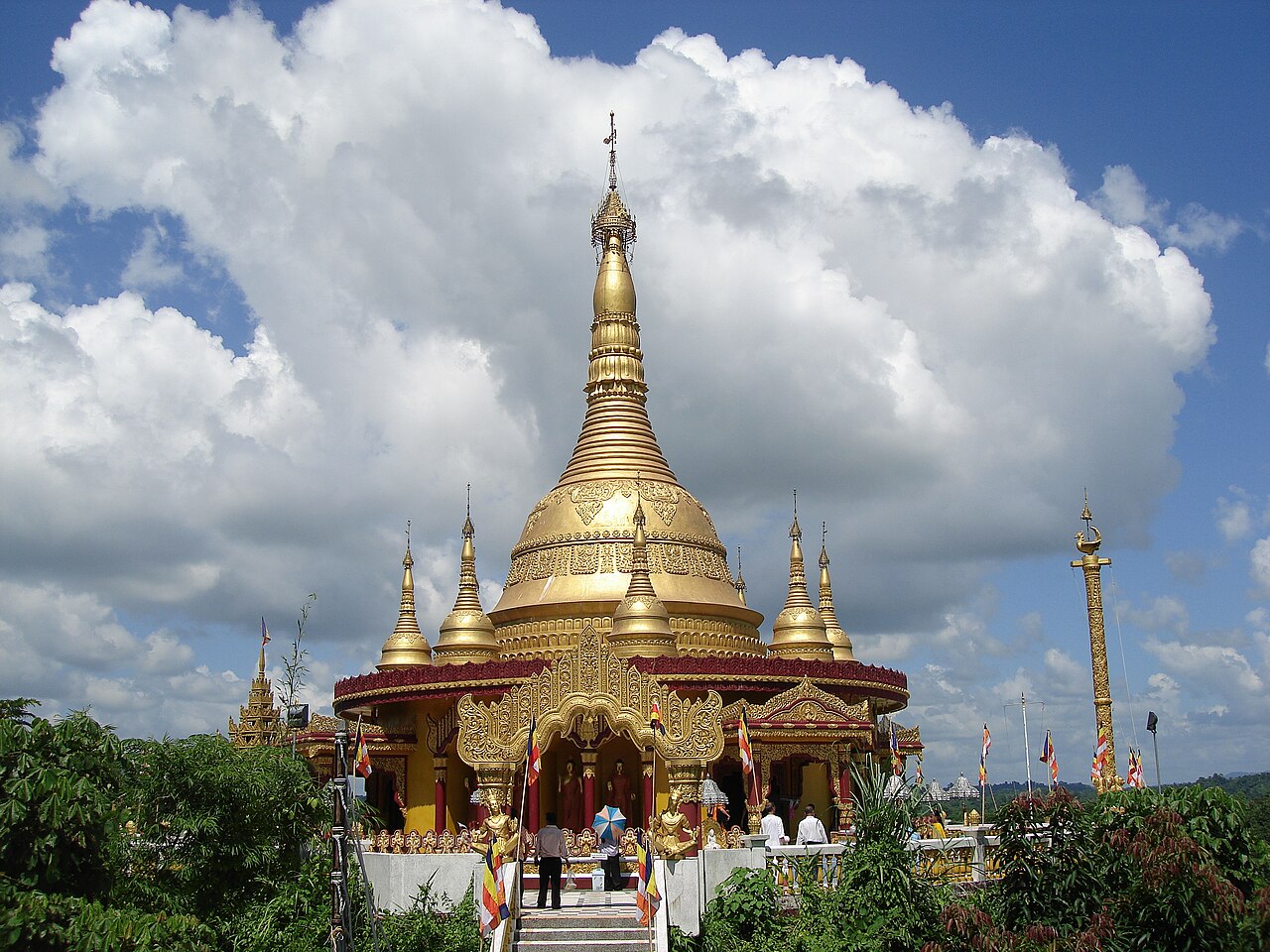
Buddha Dhatu Jadi did not arrive in a single moment. It rose, hand by hand, prayer by prayer — through the patient devotion of the Marma Buddhist community of Bandarban, and the enduring lineage of Theravada teachers whose presence shaped this hilltop sanctuary into the largest Buddhist temple of modern Bangladesh.
.jpg)
The temple's story begins with the desire of the Marma Buddhist community of Bandarban — guided by their senior monastic teachers — to enshrine the holy dhatu (relics of the Buddha) in a sanctuary worthy of the elder tradition.
A hill near Balaghata was chosen for the consecration. Its elevation, its forested seclusion, and its commanding view of the Sangu valley made it the natural choice — a place where pilgrims could ascend in mindful preparation, and where the gilded pagoda would remain visible to the people of the city below.
The architectural school was drawn from the Theravada heartlands of Southeast Asia — the gilded multi-tiered pagoda, the bell-shaped finials, the inward-curving stupa — translated with care into the language of the hills.
Five chapters in the life of a sanctuary — from foundation, to consecration, to its present role as Bangladesh's most-visited Buddhist heritage site.
The Marma Buddhist community of Bandarban, under the guidance of their monastic elders, identifies the hill near Balaghata as the site for a great new temple — a stupa for the holy dhatu.
Over years of community labour and donation, the gilded pagoda is raised in the manner of the Southeast Asian Theravada masters — multi-tiered, finely ornamented, a signal of devotion visible from across the valley.
The sacred dhatu are formally enshrined within the relic chamber. The temple is dedicated as Buddha Dhatu Jadi — the stupa of the holy relics — and consecrated according to Theravada rites.
A monumental gilded statue of the Buddha is installed in seated meditation — the second-largest Buddha image in Bangladesh — completing the inner sanctum and lending the temple its meditative gravity.
Buddha Dhatu Jadi today stands as the largest Theravada Buddhist temple in Bangladesh — a centre of pilgrimage, cultural diplomacy, and modern heritage stewardship welcoming visitors from every continent.
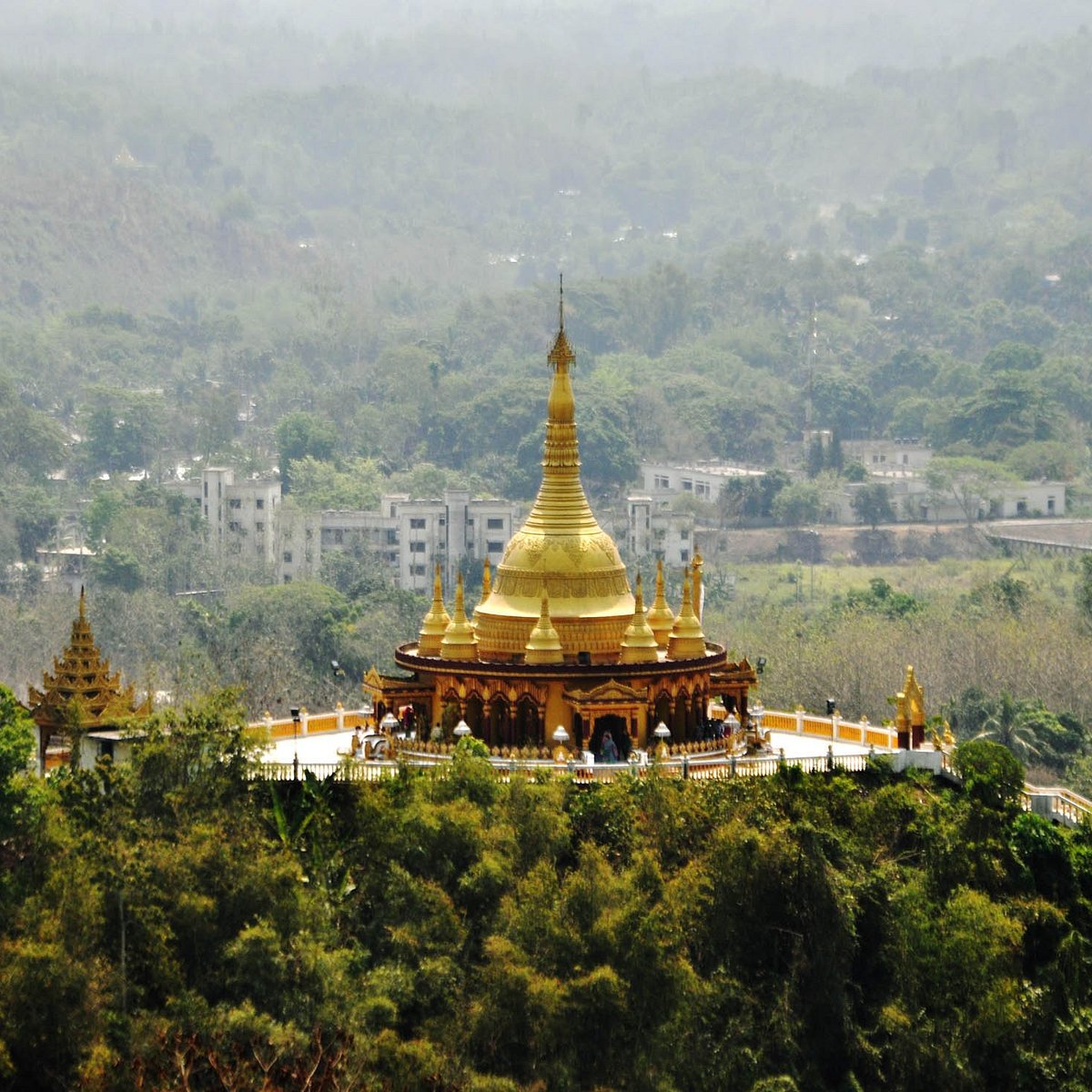
The Buddhist heritage of Bangladesh is preserved most vividly by the indigenous communities of the Chittagong Hill Tracts — chiefly the Marma, Chakma, and other Theravada peoples whose ancestral lands cradle the temple.
For these communities, Buddha Dhatu Jadi is more than a monument. It is the visible heart of a way of life: monastic discipline, lay generosity, full-moon Uposatha observances, the great festivals of Buddha Purnima, the offerings of the Kathin Cīvara Dāna at the close of the rains.
Devotees from every corner of Bangladesh, India, Sri Lanka, Myanmar, Thailand, and beyond ascend the hilltop staircase to offer flowers, incense, and silent prayer at the relics enshrined within.
The temple safeguards the rituals, iconography, and architectural lineage of the Theravada school within South Asia — a living thread connecting the Buddhism of the elders with contemporary practice.
As a centre of welcome and dialogue, the temple has come to represent harmony between the Buddhist, Hindu, Muslim, and Christian communities of the Chittagong Hill Tracts and the wider nation.
Buddha Dhatu Jadi is one of Bangladesh's flagship cultural destinations, drawing the heritage traveller into an integrated journey of architecture, ritual, and the natural beauty of Bandarban.
Through partnerships such as the Indo–BIMSTEC heritage corridor and the Trilateral Buddhist Circuit, the temple participates in a wider regional conversation about the shared Buddhist civilisation of South and Southeast Asia.
Custodianship is shared between the resident monastic community, lay devotees, and partner heritage bodies — ensuring the temple is conserved with respect for tradition and welcomed by every visitor.
"Just as a candle cannot burn without fire, men cannot live without a spiritual life."— The Buddha
Step inside the gilded pagoda — its symmetry, its symbolism, and the sacred relic chamber at its heart.
Explore Architecture