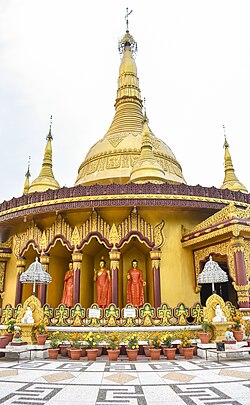
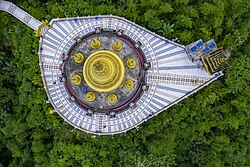
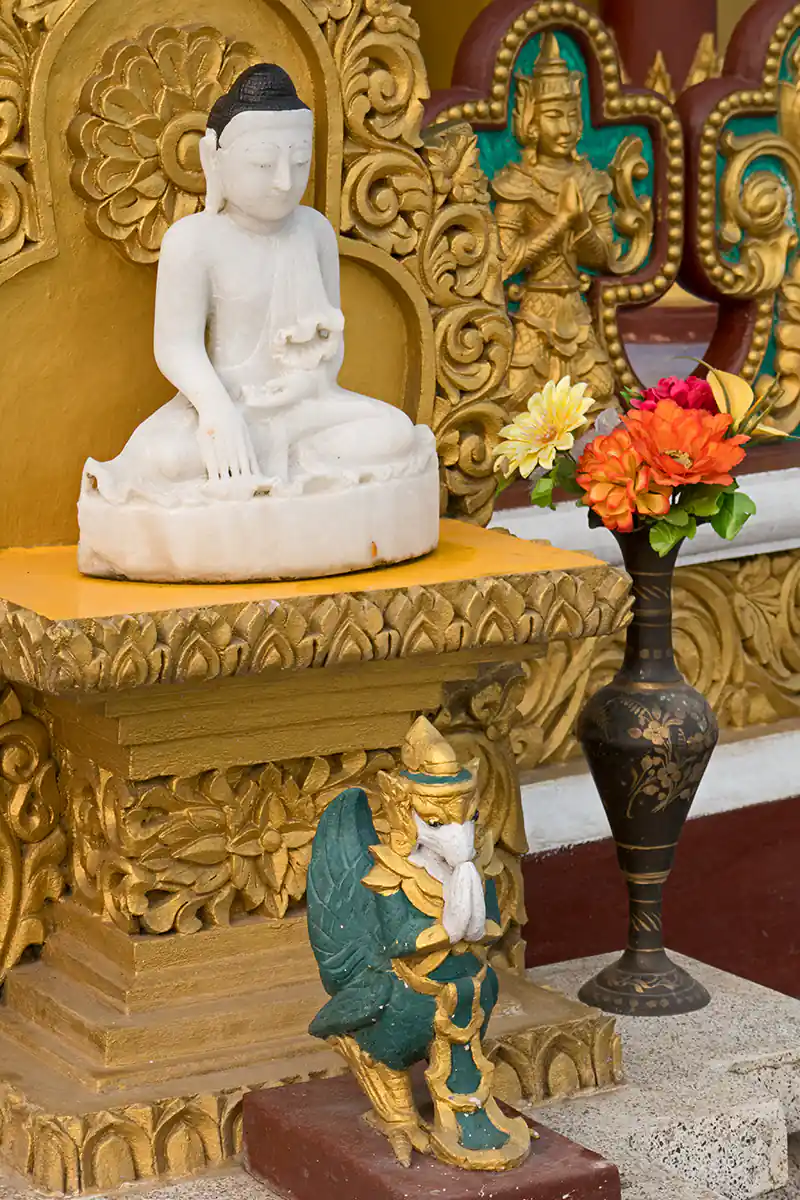
Buddha Dhatu Jadi at golden hour, viewed from Bandarban
Plan Your Pilgrimage

Pilgrimage & Visitor Guide

Everything you need to arrive prepared, walk respectfully, and depart in stillness. A practical, peaceful guide to the Bandarban Golden Temple.

How to Reach

Your Way to Bandarban

Bandarban lies in the south-eastern hills of Bangladesh, in the Chittagong Hill Tracts. The journey is part of the pilgrimage — winding roads, forested ridges, and a horizon that opens slowly into the temple's golden silhouette.

— Air

By Flight

The nearest international airport is Shah Amanat International Airport, Chittagong (CGP). From there, Bandarban is reached by road in approximately 2 to 2.5 hours.

— Road

By Bus or Car

Comfortable AC and non-AC bus services run daily between Dhaka, Chittagong, and Bandarban. Private cars and pre-arranged vehicles offer the most flexible passage.

— Local

From Bandarban City

The temple lies near Balaghata, a short ride of approximately 4 km from the centre of Bandarban. CNG auto-rickshaws, jeeps, and pre-booked taxis serve the route.

Timings · Etiquette Pilgrims walking up the temple stairway at Bandarban
Timings & Etiquette

A Quiet Approach

Temple Timings

The temple is generally open daily from sunrise to early evening (approximately 8:00 AM to 6:00 PM). On full-moon and festival days, observances may extend longer; please check with the temple office before your visit.

Dress Code

Modest attire is expected. Shoulders and knees should be covered. Avoid sleeveless tops, short skirts, and shorts. White, ivory, or earth tones are traditionally preferred.

Footwear

Footwear must be removed before entering any of the shrine areas. A designated area for footwear is available at the threshold.

Conduct

Speak softly. Do not point feet toward the Buddha. Walk clockwise around the stupa. Allow monks and resident devotees the right of way at all times.

Visitor Information

Six Essentials for Your Pilgrimage

— I

Photography Rules

Photography is permitted in the outer courtyards and at the temple exterior. Photography is not permitted inside the inner shrine where the Buddha statue and the relic chamber are housed.

  • No flash near devotees or monks
  • Drone use requires prior permission
  • Tripods discouraged in shrine areas
— II

Meditation Areas

Several quiet pavilions and shaded benches around the complex are reserved for personal meditation and silent reflection. Group meditation may be arranged with prior notice through the temple office.

— III

Best Time to Visit

October through March offers the most pleasant climate — clear skies, cool air, and the unobstructed panorama of the Sangu valley. The full-moon days of Buddha Purnima (May) are particularly auspicious.

— IV

Safety Notes

The hilltop ascent involves several flights of stairs. Visitors with mobility constraints should plan accordingly. Carry water, sun protection, and modest cover for the inner shrine. Travel in daylight and respect local advisories.

— V

Nearby Stays

Bandarban offers a range of accommodation — from boutique heritage resorts to comfortable mid-range hotels and guest houses. Many properties lie along the Sangu river, with views toward the temple's distant silhouette.

  • Hill View & resort properties
  • Heritage guest houses in town
  • Family-run home-stays in the hills
— VI

What to Bring

A simple offering of flowers, a small lamp, or a stick of incense is welcomed at the outer altar. Bring quiet attentiveness — the most honoured offering of all in the Theravada tradition.

Festival evening lights at Buddha Dhatu Jadi
Festivals & Auspicious Days

Days That Open the Temple's Heart

If you can plan your visit to coincide with one of the major festival days, the temple is at its most luminous — flooded with offerings, music, lamps, and the great gathering of the Marma community.

  • Buddha Purnima
    The full moon of May — celebrating the Buddha's birth, awakening, and parinibbāna in a single day.
  • Kathin Cīvara Dāna
    The robe-offering festival at the close of the rains retreat — processions, devotion, and the offering of new robes to the monks.
  • Uposatha (Full-Moon Days)
    Twice-monthly observances of the eight precepts — chanting, meditation, and a shared atmosphere of stillness.
Reach Out

Need Help Planning Your Pilgrimage?

Our patron office can assist with travel guidance, group visit arrangements, and special heritage-tour requests for international visitors.

Contact the Office